
TopDown Cleaning Guide
Clinic and Reception Area Cleaning Checklist
A Practical Schedule for an Orderly Clinic
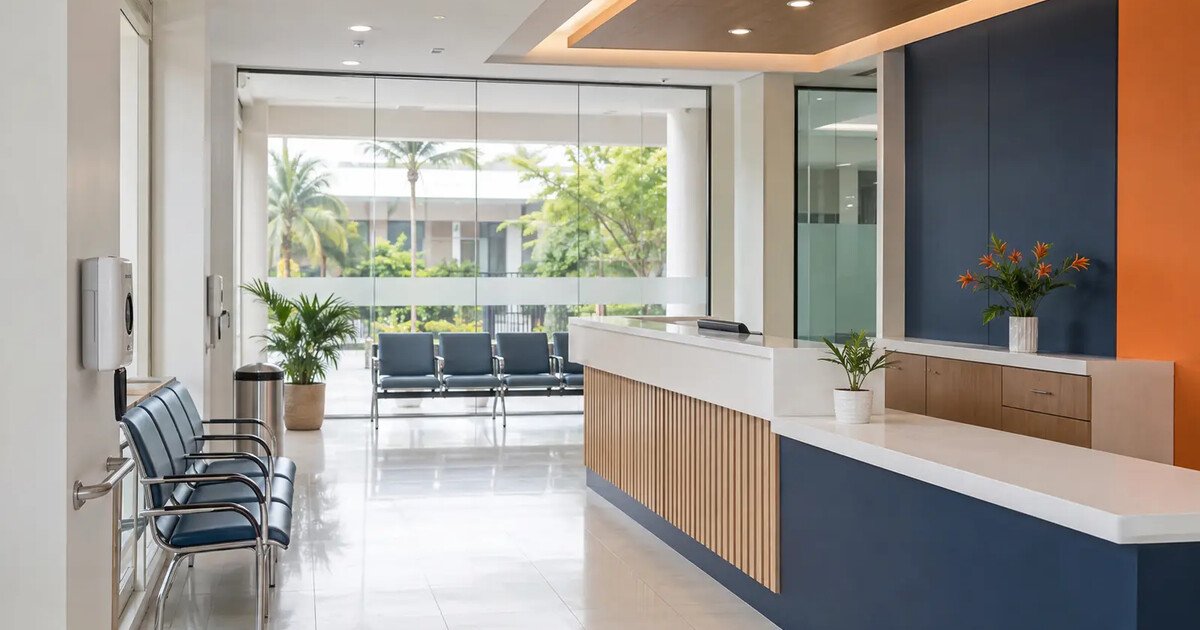
The reception area shapes patients’ first impressions. A clear cleaning schedule also supports employee comfort, organized work areas, and consistent hygiene procedures.
A visibly tidy clinic is not automatically medically safe. Environmental cleaning is one part of a wider infection-prevention program, and the correct method depends on how an area is used, how likely it is to become contaminated, how often it is touched, and the needs of the patients served. Guidance for outpatient facilities uses this kind of risk-based approach to cleaning frequency.
These distinctions follow established healthcare environmental-cleaning definitions. Reprocessing reusable medical or dental instruments remains the responsibility of trained clinic personnel under the facility’s approved procedures.
1. What Should Be Cleaned Daily
“Daily” is a baseline. Outpatient waiting, consultation, procedural, and restroom areas have different baseline frequencies. Items contaminated during use may need immediate attention or cleaning between patients. Set the schedule according to patient volume, workflow, and risk.
Reception desk and administrative touchpoints
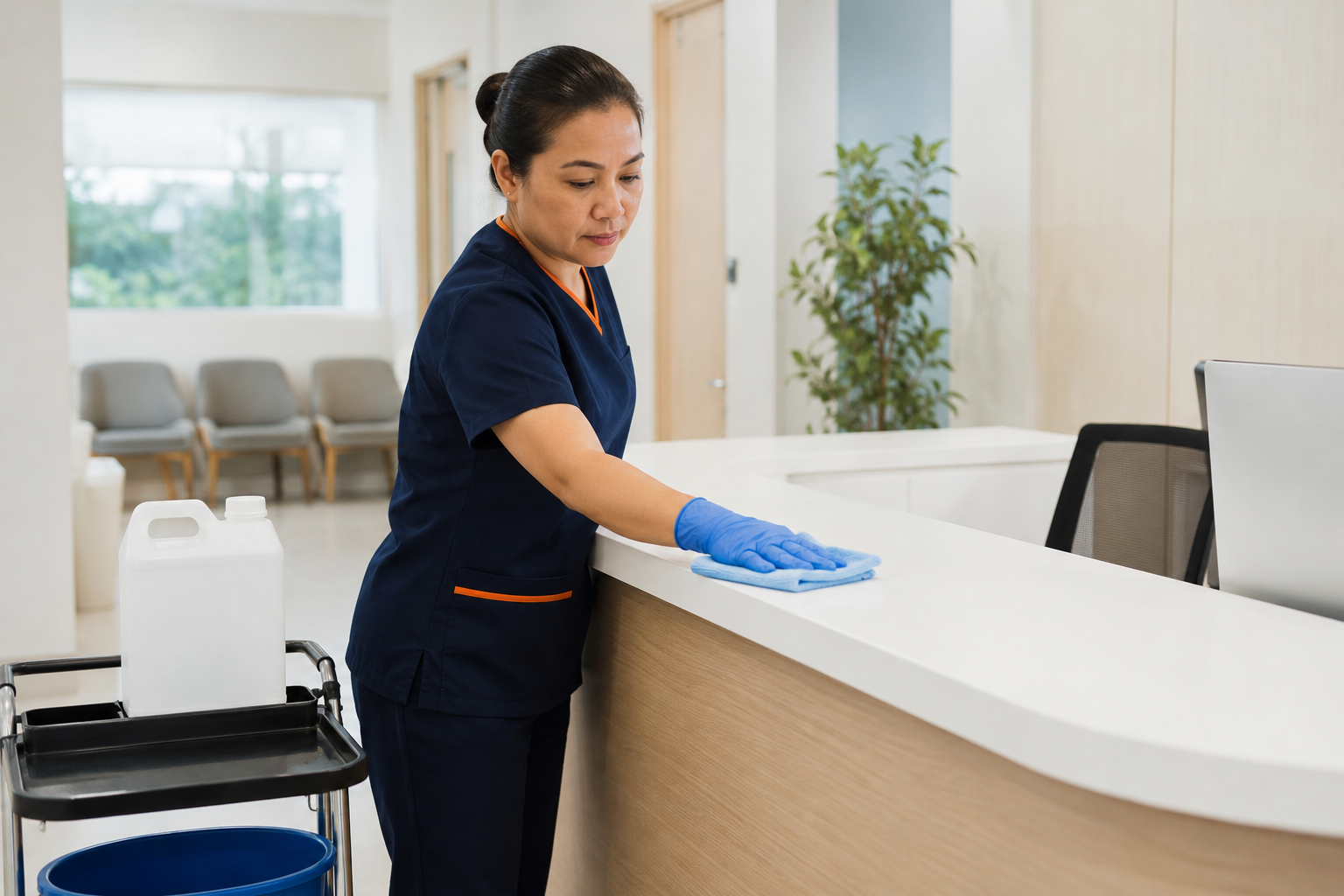
- Clean the reception counter, check-in ledge, writing surface, drawer pulls, and accessible partitions.
- Clean shared pens, clipboards, payment terminals, tablets, telephones, and keyboards as appropriate for their materials.
- Follow the manufacturer’s written cleaning and disinfection instructions before applying moisture or disinfectant to electronics, coated surfaces, medical equipment exteriors, and sensitive finishes.
Waiting room and frequently touched surfaces
- Wipe chair armrests, chair backs, side tables, wheelchair handles, railings, door handles, push plates, light switches, and frequently handled counter edges.
- Clean children’s play items, water dispensers, remote controls, and shared reading materials only through a method suitable for the item. Remove items that cannot be maintained safely under clinic policy.
- Increase attention to surfaces identified as high touch. These generally require more frequent cleaning than minimal-touch surfaces.
Floors, entrances, and visible spills
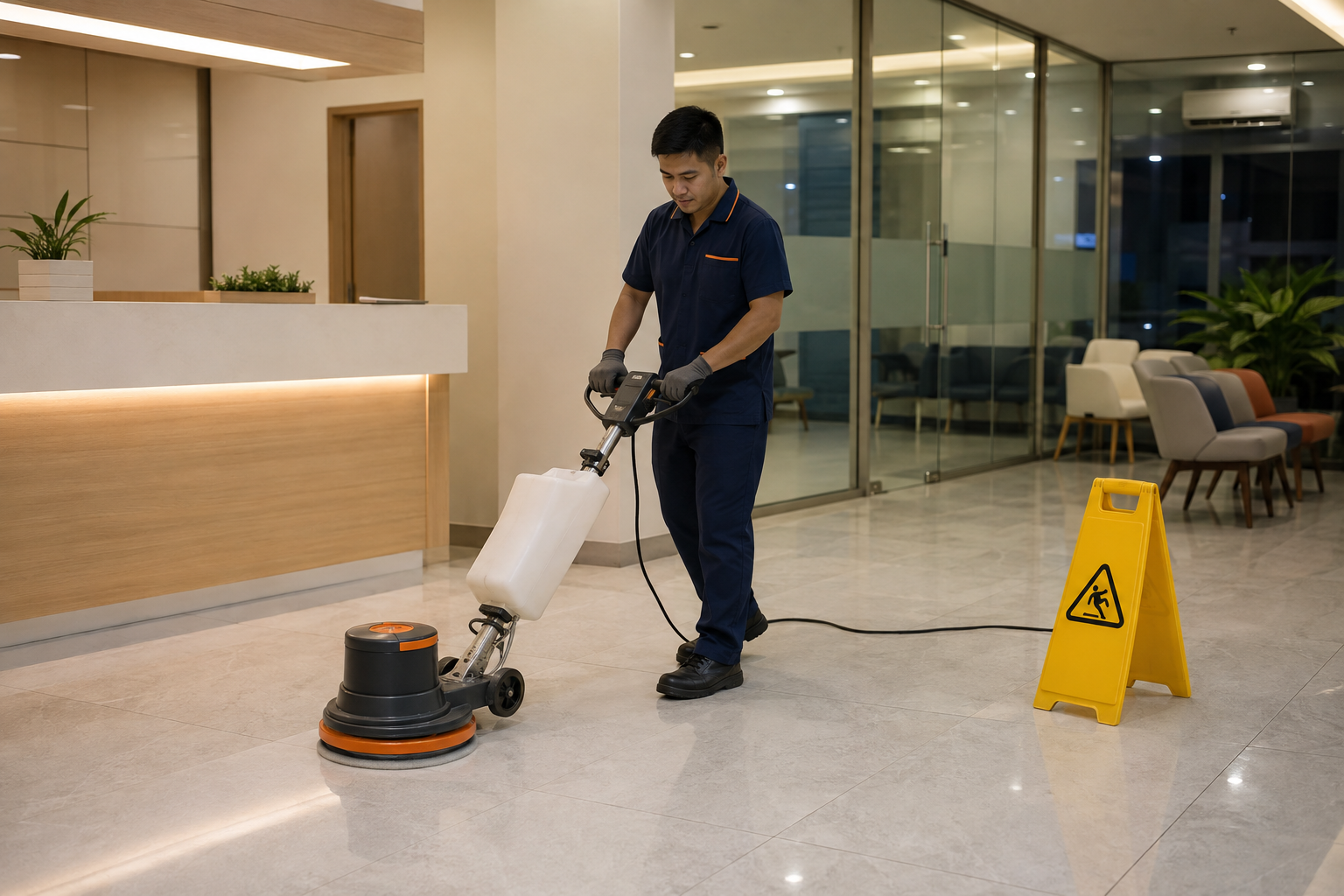
- Remove tracked-in dust and debris, spot-clean visible soil, and clean floors after completing higher surfaces.
- Use a wet-floor or caution sign while the surface is damp. Floors in ordinary outpatient areas are normally cleaned daily, while the need for disinfection depends on facility risk and policy.
- Blood or bodily-fluid spills require immediate, controlled attention by trained personnel following the clinic’s exposure-control and spill-response procedure. This checklist does not provide a spill-cleaning protocol.
Restrooms and handwashing areas
- Clean and, where required by facility policy, disinfect faucets, sink edges, flush controls, toilet seats, grab bars, door handles, locks, dispensers, and other frequently touched points.
- Clean mirrors, counters, partitions, visible wall soil, and floors. Refill soap, tissue, and hand-drying supplies.
- Inspect shared restrooms during the day. Healthcare guidance recognizes that public or shared toilets may require more frequent cleaning than private toilets.
Consultation and treatment-room environmental surfaces
- Clean accessible noncritical environmental surfaces such as examination-table exteriors, work counters, chair surfaces, cabinet handles, switches, and approved equipment exteriors according to assigned responsibilities.
- Clinical and procedural surfaces may require cleaning and disinfection between patients. The clinic should identify the responsible clinical or cleaning personnel and the exact approved product and method.
- Do not open, dismantle, or reprocess medical devices unless the cleaner is specifically trained, authorized, and following the manufacturer’s written instructions.
Staff areas, waste bins, and cleaning equipment
- Clean shared office touchpoints, pantry counters, appliance handles, tables, chair backs, locker handles, and staff restroom surfaces.
- Remove ordinary waste according to the clinic’s segregation policy. Do not compress bags, reach into bins, or handle sharps and regulated healthcare waste outside the facility’s approved protocol.
- After use, clean, disinfect where required, dry, and store reusable buckets, cloths, mop heads, and other tools in the designated area. Reusable cleaning equipment can itself become contaminated and should be reprocessed and fully dried before storage.
End-of-day inspection and documentation
- Perform a visual walk-through, confirm completion, initial the checklist, and record any task that could not be completed.
- Report damaged upholstery, cracked finishes, leaks, pest activity, depleted products, or surfaces that can no longer be cleaned effectively.
2. What Should Be Cleaned Weekly
Weekly cleaning gives attention to lower-touch areas and details that may not require daily work under normal conditions. It should be performed earlier whenever a surface becomes visibly dirty, traffic increases, or clinic policy requires greater frequency.
- Dust and clean shelving, display areas, picture frames, low-touch cabinet surfaces, and accessible tops of furniture.
- Clean chair seams, undersides, legs, casters, and the concealed edges of waiting-room furniture.
- Detail-clean interior glass, partitions, window ledges, door frames, baseboards, corners, and reachable wall marks.
- Clean less frequently used storage shelves and remove expired or unnecessary nonclinical materials through the responsible staff member.
- Deep-vacuum carpets and suitable upholstery using the correct attachment and a method compatible with the material.
- Detail-clean staff pantry surfaces, lockers, refrigerator exteriors, cabinet fronts, and furniture undersides.
- Inspect soap, paper, hand-hygiene, and cleaning-product dispensers for cleanliness, damage, and adequate stock.
- Review checklist completion, recurring missed areas, stock levels, product expiry dates, and upcoming supply needs.
3. What Should Be Cleaned Periodically
“Periodically” means an interval based on use, condition, risk, manufacturer recommendations, and clinic policy. It may mean monthly, quarterly, semiannually, or as needed. These are planning aids, not fixed legal frequencies.
- Perform controlled high-level dusting on accessible tops of cupboards, ledges, pipes, grilles, and other horizontal surfaces.
- Clean accessible air vents and grilles without opening or servicing HVAC components. Technical maintenance belongs to qualified personnel.
- Arrange professional carpet or upholstery extraction when soil, odor, staining, or the preventive-maintenance schedule indicates it.
- Schedule floor scrubbing, polishing, recoating, or resealing only where suitable for the flooring and permitted by its manufacturer.
- Detail-clean walls, ceilings, blinds, light-fixture exteriors, interior windows, and exterior glass that can be accessed safely.
- Move suitable furniture to clean concealed floor areas, wall edges, casters, and furniture backs.
- Reorganize storage rooms so products remain labeled, secured, accessible, and separated according to clinic policy.
- Inspect reusable tools and replace worn mop heads, frayed cloths, damaged handles, and containers that can no longer be maintained properly.
- Review the chemical inventory, product labels, expiry dates, and available Safety Data Sheets. Workers need understandable hazard information and access to labels and safety data for workplace chemicals.
- Inspect for gaps, leaks, moisture, food debris, or other conditions relevant to the clinic’s pest-prevention program, then refer concerns to the appropriate service provider.
- Evaluate whether the current cleaning schedule still matches patient volume, observed contamination, recurring complaints, and facility changes.
- Arrange professional deep cleaning when ordinary maintenance no longer addresses accumulated soil in accessible environmental areas.
Cleaning Principles That Apply at Every Frequency
- Assess before starting. Look for patients, obstacles, damaged surfaces, spills, and any condition that changes the necessary supplies, PPE, or responsible personnel.
- Work from cleaner areas toward dirtier areas. This reduces the chance of carrying soil from a restroom or contaminated zone into a cleaner space.
- Work from higher surfaces toward lower surfaces. Floors are cleaned last so they collect material that may fall during higher-level work. Both sequences are part of established healthcare environmental-cleaning technique.
- Use fresh, correctly prepared solutions. Follow the product label for dilution, application method, compatible surfaces, storage, and disposal.
- Separate tools by area. Color-coded cloths, mops, or containers can help reduce cross-use between restrooms, reception areas, and patient-care zones. CDC cleaning guidance illustrates the use of different-color cloths to avoid cross-contamination.
- Do not reuse a contaminated cloth or mop solution across unrelated areas. Replace cloths and solutions when soiled and at the intervals set by facility procedure.
- Respect disinfectant contact time. The treated surface may need to remain visibly wet for the full period stated on the label. The product’s directions also identify approved use sites, dilution, and application method. Contact time is necessary for effective disinfectant use.
- Never mix chemicals unless the labels expressly permit it. Some combinations can create toxic acids or gases or alter how the products work.
- Wear task-appropriate PPE. Select gloves, eye protection, or other equipment using the product label, Safety Data Sheet, facility assessment, and applicable workplace requirements. Philippine workplace-safety law recognizes the provision and proper use of necessary PPE based on the work hazard.
- Control the work area. Place warning signs around wet floors and secure products when unattended. Disinfectants should be kept away from children and used only as directed.
- Ventilate when required. Follow label precautions and facility rules. Adequate ventilation can help reduce exposure to cleaning-product vapors and byproducts during and after use. Ventilation should accompany safe product use.
- Document and report. Record completion, note exceptions, and report damaged, porous, cracked, or contaminated surfaces that cannot be cleaned as intended.
Printable Summary Checklist
| Frequency | Area or Item | Required Action | Responsible Person | Completed / Initials |
|---|---|---|---|---|
| Daily baseline | ||||
| Daily / as needed | Reception counter and shared devices | Clean; disinfect only as directed and compatible | ____________ | ____________ |
| Daily / more often | Waiting-room high-touch surfaces | Clean identified touchpoints | ____________ | ____________ |
| Daily / as assigned | Consultation environmental surfaces | Clean; follow between-patient policy | ____________ | ____________ |
| Daily / inspect during day | Restrooms and handwashing areas | Clean, disinfect where required, and restock | ____________ | ____________ |
| Daily | Floors and entrances | Clean last; place caution sign while wet | ____________ | ____________ |
| End of shift | Tools and records | Reprocess and dry tools; verify and initial log | ____________ | ____________ |
| Weekly baseline | ||||
| Weekly / as needed | Shelves, displays, glass, baseboards, corners | Detail-clean low-touch surfaces | ____________ | ____________ |
| Weekly / as needed | Furniture seams and suitable upholstery | Vacuum and detail-clean | ____________ | ____________ |
| Weekly | Records and supplies | Review logs, stock, damage, and expiry dates | ____________ | ____________ |
| Periodic schedule | ||||
| Planned interval | High surfaces, vents, walls, lights, windows | Detailed accessible-area cleaning | ____________ | ____________ |
| Planned interval | Floors, carpets, and upholstery | Approved restorative or extraction cleaning | ____________ | ____________ |
| Planned interval | Program and equipment review | Adjust schedule; replace worn tools | ____________ | ____________ |
Adapt the frequency to actual patient traffic, visible contamination, facility risk, manufacturer instructions, and the clinic’s infection-control policies.